
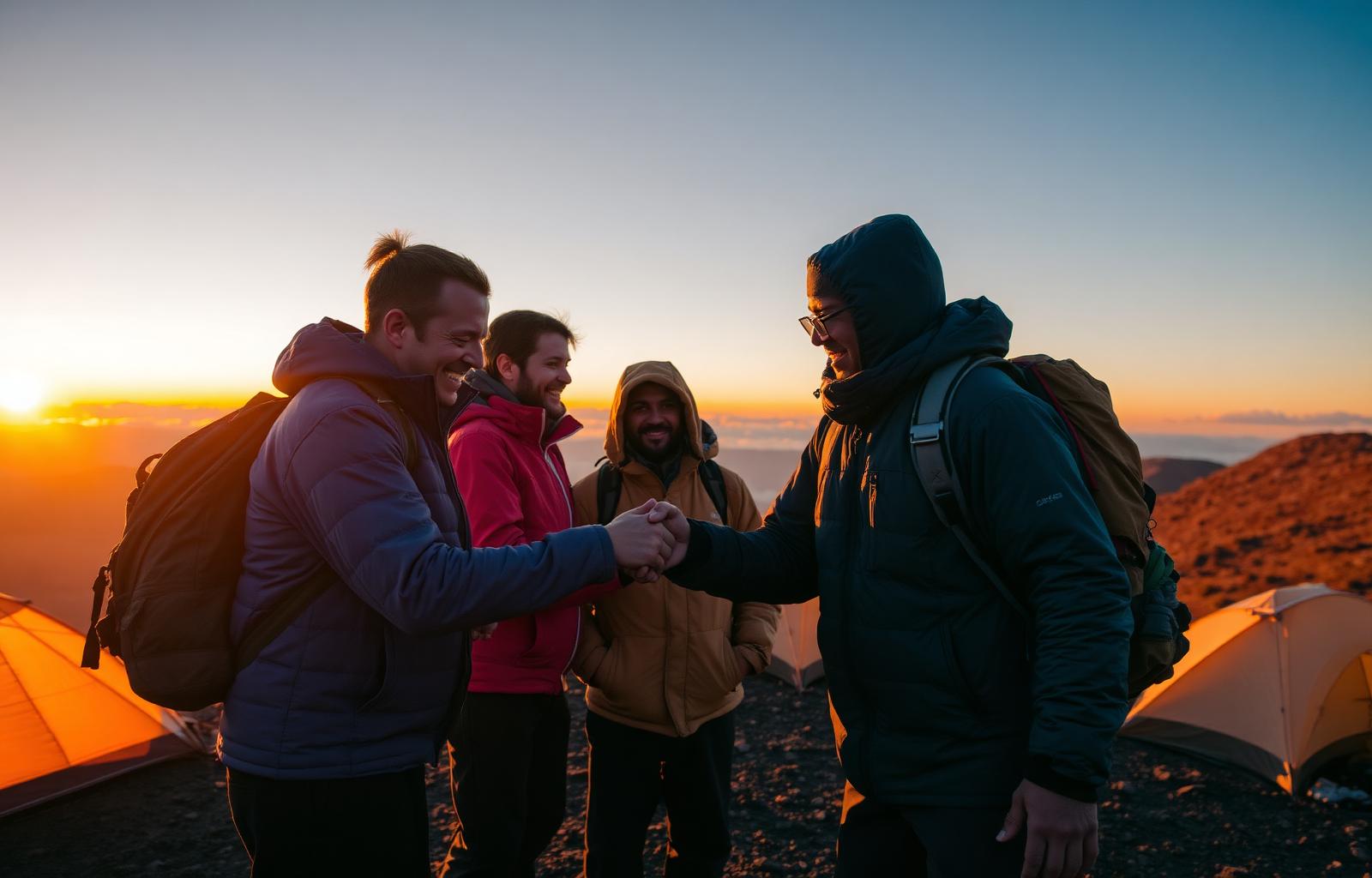
Climbers and porters celebrating together at a Kilimanjaro camp

A Thank-You, Done Right

Tipping Guide

How much to tip, when to hand it over, and how to make sure it reaches the right hands.

Why Tipping Matters

A tradition worth honouring.

Tipping is a longstanding tradition on Kilimanjaro and a meaningful part of every guide, cook and porter's income. At Timeless Dream Travels our crew is paid a fair wage above the legal minimum — your tip is a heartfelt thank-you for service well rendered, not a wage they depend on to survive. Knowing the difference matters.

The questions are simple: How much? When? And to whom? The answers, below.

Is Tipping Necessary?

Yes — and it's earned, not automatic.

Every climber is supported by a small team — typically a lead guide, an assistant guide, a cook, a waiter, and a minimum of two porters per climber. They carry your gear, set up camp, cook your meals, watch your health, and walk you to the summit at 2 a.m. when most of the world is asleep.

Beyond the price of your climb, tipping this team is expected. How much you tip should reflect how well your crew served you — not whether you personally reached the summit. Many climbers turn back for medical reasons that have nothing to do with the team that supported them.

KPAP-Aligned Tip Amounts

The recommended range.

Daily amounts in USD. Larger groups can tip toward the lower end; solo travellers and small parties toward the higher end.

Lead Guide
per group / day
USD 20 – 25
Assistant Guide
per group / day
USD 15 – 20
Cook
per group / day
USD 12 – 15
Waiter
per group / day
USD 8 – 10
Toilet Porter
per group / day
USD 8 – 10
Porter
per porter / day
USD 8 – 10

Guides, cooks and waiters are tipped per group; porters are tipped per porter. Multiply each daily amount by the number of days on the mountain.

How Many Porters Will You Have?

Two to three per climber.

On the Marangu Route (hut-based), expect around two porters per climber. On all other routes — Lemosho, Machame, Northern Circuit, Rongai and Umbwe — expect two to three porters per climber, since tents, kitchen gear and shared equipment travel with you. Smaller parties carry a higher porter-to-climber ratio.

Take a few minutes early in the climb to learn the names and roles of your team. The recognition matters — and the climb feels different when you know who is walking beside you.

When & How to Hand It Over

The tipping ceremony.

01

At the end, not the beginning

Tips are handed out at the last camp on the final morning — after you've signed out with the park authorities and the full team is gathered. There's usually a short song, a few words, and applause. Bring cash in small denominations.

02

Individual envelopes, by name

Hand each crew member their own envelope rather than passing one lump sum to the lead guide. It ensures every porter at the back of the line receives exactly what you intended for them — and it makes the gratitude personal.

It is our company policy that guides and porters do not discuss tips during your climb. Please stick close to the KPAP-aligned ranges above — and if any team member did not perform well, you are fully within your right to tip on the lower end.

Our Promise

A responsible Kilimanjaro operator.

Timeless Dream Travels employs a dedicated, long-tenured mountain team — paid fair wages, insured, fed, properly equipped, and supported in line with KPAP guidelines on every climb. Your tip is the final, generous thank-you on top of an already-fair wage. That is the difference between a tip and a lifeline — and we believe travellers deserve to know which one they're giving.

Kilimanjaro at sunset

"Tip generously. They earned every shilling, twice over."