
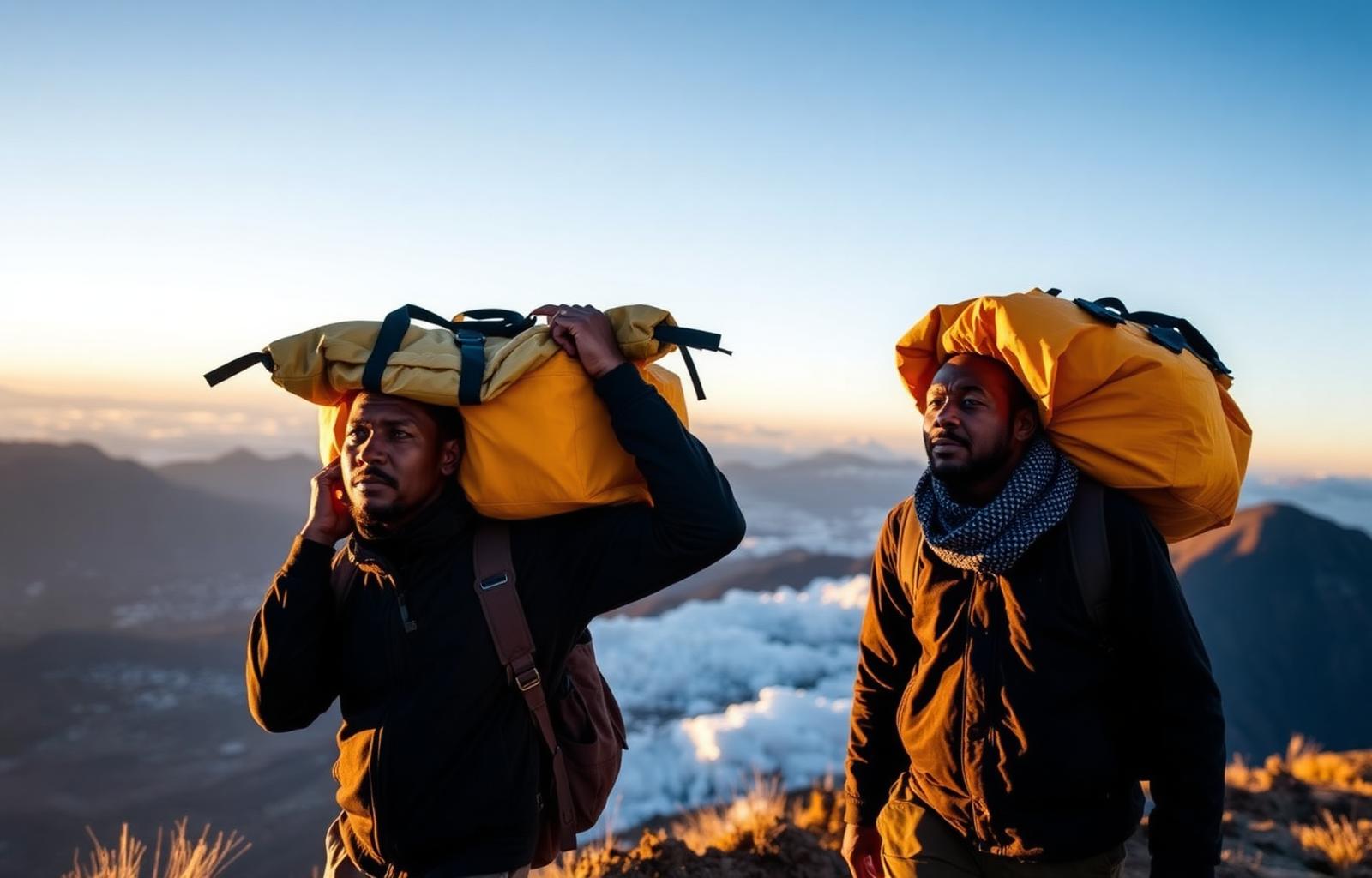
Tanzanian porters ascending Kilimanjaro at sunrise

The Heroes Behind the Curtain

Kilimanjaro Porters

Without them, the summit is unreachable. With them, the mountain becomes home.

15kg
Max duffel weight
2–3
Porters per climber
KPAP
Partner-certified

A Climb is a Team Sport

You don't summit Kilimanjaro alone.

For local Tanzanians, Kilimanjaro is more than a mountain — it is an adventure, a workplace, and for many, a calling. Climbers who reach Uhuru Peak describe the experience as spiritual, life-changing. None of it would be possible without the quiet, tireless work of our porters.

Imagine waking in a freezing camp at 4,600 m to find a smiling man offering hot coffee at your tent door; another quietly refilling your water bottles; a third stirring porridge over a stove. After a long day of climbing, you arrive at the next camp to find your tent already pitched, dinner already cooking, your bed already warm. This rhythm — kept like clockwork day after day — is the work of porters.

An Honest Word

The truth is that, for decades, Kilimanjaro porters have been overworked and underpaid. Many budget operators continue to violate basic labour rights. In recent years the industry has improved — weight limits, minimum wages and welfare standards are now in place. But ethical climbing remains a choice, not a default.

Choose your operator carefully. The cheapest climb on Kilimanjaro is almost always paid for by someone you'll never meet.

Our Porter Standards

Four non-negotiables.

Strict weight limits

Every porter carries a maximum of 15 kg per duffel — excluding tents, sleeping mats and food, which are carried separately. We weigh bags at every gate, every time.

Fair wages, paid directly

Our porters are paid a fair wage above the legal minimum and do not depend on tips to feed their families. Tips are a thank-you, never a survival lifeline.

Insurance & gear provided

Every porter is insured, fed three hot meals a day on the mountain, and outfitted with proper boots, jackets, gloves and sleeping kit — never sent up underdressed.

Trained Rescue Team

Our porters are part of the Kilimanjaro Rescue Team. In an emergency, they help carry stretchers, oxygen and the injured down the mountain — quickly, calmly, expertly.

How Many Porters Do You Need?

On average, two to three porters per climber.

The larger the group, the fewer porters required per person. On the Marangu Route, where huts replace tents, around two porters per trekker is typical. On all other routes — Lemosho, Machame, Northern Circuit and Rongai — expect two to three porters per climber, since tents, mess tents and kitchens must travel with you.

The Weight Limit

15 kg per duffel. Strictly.

Each climber is assigned one porter to carry their duffel bag from camp to camp. For porter welfare — and because porters traditionally carry on their head and shoulders — every duffel is capped at 15 kg, excluding sleeping mats, tents and shared food which are carried separately.

Please pack a soft, waterproof duffel rather than a rigid suitcase or framed pack. And please don't ask, or allow, a porter to carry more than the limit. Other operators may turn a blind eye. We don't.

Tipping, Done Right

A tip is gratitude, not a wage.

On other budget operations, porters are picked up at the National Park gate each morning and paid almost nothing for the climb. Their families survive on whatever climbers choose to tip at the end. It's a system that quietly puts the moral weight of paying a fair wage onto the traveller — and most climbers never even know.

With Timeless Dream Travels it is different. Our porters earn a fair wage before any tip is added. Tips are a heartfelt thank-you, not a survival lifeline.

One practical request: at the end of your climb, please hand tips directly to each porter, cook and guide individually — or place them in a transparent group envelope distributed in front of the team. Passing a single lump sum to the head guide to "share out later" rarely ends well for the porters at the back of the line.

Our KPAP Commitment

Kilimanjaro Porters Assistance Project.

KPAP was founded to improve the working conditions of Kilimanjaro porters. As a partner-aligned operator, we support their mission through three core programmes:

  • Lending free mountain clothing to porters who arrive without proper kit.
  • Advocating for fair wages, weight limits and ethical treatment across every operator on the mountain.
  • Facilitating educational opportunities — English classes, first aid training, guide certification — for mountain crews.

At Timeless Dream Travels we are fully committed to fair porter treatment, transparent wages, weight limits and welfare on every climb we operate. Choosing us means choosing a climb that respects the people who make it possible.

Kilimanjaro at sunset

"Behind every climber who reaches Uhuru, a team of quiet heroes walked ahead."