
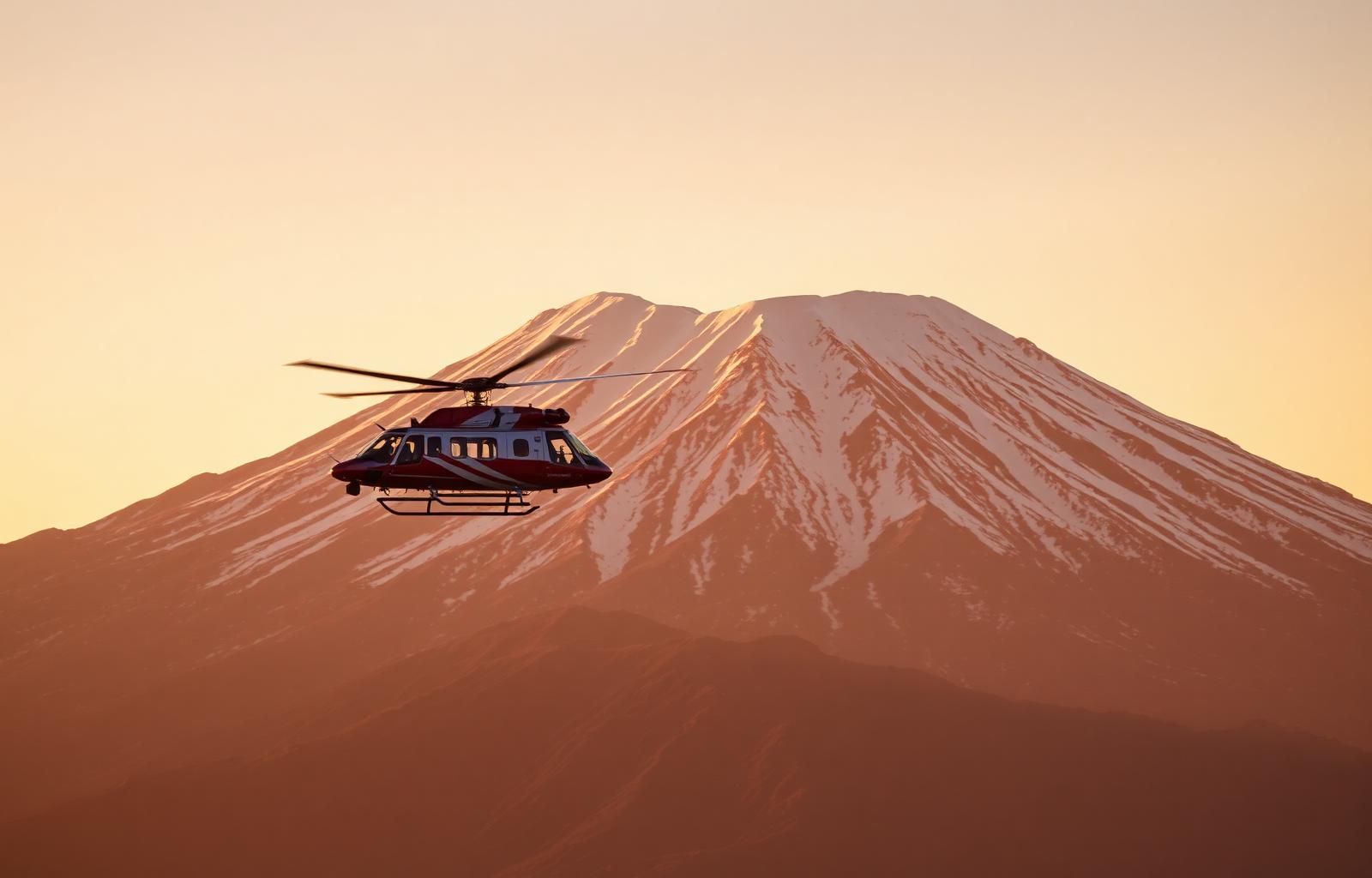
Rescue helicopter flying near Kilimanjaro at sunrise

Your Safety, Above All

Kilimanjaro Rescue

Helicopter evacuation in fifteen minutes. WFR-trained guides on every step.

15min
Typical evacuation time
6,000m
Helicopter ceiling
24/7
Rescue team on call

A New Era of Mountain Safety

Help, now measured in minutes.

For most of Kilimanjaro's modern climbing history, a serious altitude emergency meant a long descent on foot or stretcher — sometimes a full day from the upper camps. There was no locally based helicopter and no rapid extraction. That has changed.

Today, dedicated rescue helicopters are stationed on the mountain's doorstep. When altitude sickness, acute mountain sickness or any other emergency turns serious, evacuation from the rescue site to a hospital in Moshi or Arusha can typically be completed within fifteen minutes of lift-off — a difference that, in altitude medicine, is the difference between an inconvenient story and a life-changing one.

How Rescue Works on Our Climbs

Four layers of safety.

Locally based helicopters

Until recently, helicopter evacuations on Kilimanjaro were rare and slow. Today, dedicated rescue helicopters are stationed locally, with typical evacuation times of around 15 minutes from call to lift.

WFR-trained guides

Every senior guide is certified to Wilderness First Responder protocols — trained to assess, stabilise and, if a helicopter cannot fly, carry an injured climber safely off the mountain.

Stretcher & oxygen on every climb

We carry a portable stretcher, supplementary oxygen and a pulse oximeter on every expedition. Park ranger rescue teams assist us when ground evacuation is required.

Constant communication

Daily health checks at camp, radio contact between guides and base, and direct lines to the rescue operator. Decisions to descend or evacuate are made early — never late.

Before You Climb

Travel insurance is non-negotiable.

Every climber on a Timeless Dream Travels expedition is required to hold travel insurance that includes helicopter evacuation up to 6,000 m and medical treatment. The rescue helicopter operator works directly with major travel insurance providers, so you should not have to worry about payment in the moment of an evacuation — but you must confirm the cover is in place before you arrive.

What your policy should cover

  • Helicopter evacuation from altitudes up to 6,000 m above sea level.
  • Medical treatment, hospitalisation and repatriation.
  • Trip cancellation and curtailment.
  • Loss of baggage and personal effects.

A full helicopter evacuation and follow-on treatment typically costs around USD 6,000. With the right policy, you pay nothing in the moment — the rescue is dispatched, you are taken off the mountain, and the paperwork follows later.

When a Helicopter Cannot Fly

We are trained for that, too.

Weather, wind and visibility do not always cooperate. When a helicopter cannot fly, our team is fully trained to evacuate a climber on foot — with a portable stretcher carried by porters and guides, supported by Kilimanjaro National Park rescue rangers. WFR protocols guide every decision: assessment, stabilisation, descent.

There is no excuse for complacency at altitude. We don't hope for the best — we plan for the worst, so the best is what actually happens.

A Climb in Safe Hands

Your summit, our responsibility.

At Timeless Dream Travels, your safety is the first item on every itinerary and the last word in every decision we make on the mountain. The summit is the prize — but it is never worth more than the climber who came for it.

Kilimanjaro at sunset

"We plan for the worst, so the best is what actually happens."